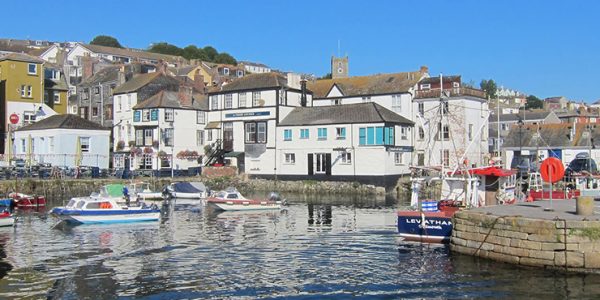
From the front bedroom windows of The Captain’s House, you can see where the pink zebras live. Ok, they aren’t real zebras, but they are as novel and new to science as a red stripey horse would be, and they have only been found here. But you’ll need to use your imagination as they live under the water.
What you can’t see from the bedroom windows are cruise ships in the Penryn River opposite, in spite of campaigns for them to be allowed to anchor there. Commercially minded locals want to make Falmouth an even more attractive destination for the thousands of ship-borne investors in holiday experiences and memorabilia, with money burning a hole in their pockets, who long to spend a few hours ashore. To date the campaigners have been unsuccessful because the riverbed is carpeted with maerl, a coral-like seaweed that creates some of the richest habitats in the sea and is highly prized by environmentalists who do not want them damaged by visiting ships.
Maerl beds might look a bit like coral, but they are in fact thousands of pieces of free-living calcified seaweed that weave themselves into a rug of life. The recent discovery of ‘pink zebra weed’ – a popular name amongst the scientific diving community though its scientific name is ceramium ruenessianum – clinging to the weave off the Roseland Peninsula is another blow to the ‘Bring Cruise Ships Closer’ campaign. Natural England, who have funded the recent discovery, have cleverly raised the profile of this exotic habitat, and introduced another obstacle for those who want closer encounters with these greyhounds of the sea.
So, for now at least, the visiting cruise ships will have to keep anchoring in Falmouth Bay, and the local ferries will continue to bring their cargo ashore in pods to explore the delights of Falmouth for a few hours before being shepherded back to their travelling home. I’m sure that a lavish dinner and theatrical show awaits them, before they sail off to St Malo, or further out into the deep oceans that are still probable teeming with undiscovered forms of life, some of which may be just as colourful as we have here.
We have always known that Falmouth was full of life, but we now know that some of it is stripey and pink.